
Key Ingredients & Why Each One Matters

Turkey Breakfast Sausage: Half a pound of maple-flavored sausage adds a subtle sweetness that balances the sharp Dijon mustard and earthy garlic, creating depth without overpowering the dish. Brown it thoroughly before layering so the rendered fat seasons the casserole and ensures the meat is fully cooked through.
Croissants: Four large plain croissants are essential—their natural butter content and flaky structure absorb the custard without becoming mushy or dense. Cut them into 1-inch pieces so they nestle together and soak evenly overnight, creating that signature custardy interior.
Gruyère Cheese: Two cups of shredded Gruyère adds sophistication without the sharp bite of aged cheddar. This nutty, slightly sweet cheese melts beautifully and distributes throughout the layers, creating pockets of richness that complement the maple sausage perfectly.
Eggs: Six large, room-temperature eggs blend more smoothly into the custard, ensuring a silky texture. They’re the binding agent that transforms the croissants into a cohesive dish while keeping everything tender.
Half-and-Half: One cup of this cream-to-milk blend strikes the perfect balance—rich enough to create a luxurious custard without being so heavy that the casserole becomes dense. Cold half-and-half helps the custard stay cold enough to absorb properly during the overnight chill.
Dijon Mustard: One teaspoon adds a subtle savory tang that elevates the overall flavor without making the dish taste like mustard. It bridges the gap between the maple sweetness and the cheese’s earthiness.
Garlic Powder: Just a half-teaspoon provides a gentle savory note that complements both the sausage and cheese without introducing raw garlic bite.
Kosher Salt & Black Pepper: Half a teaspoon of salt and a quarter-teaspoon of freshly ground pepper season the custard evenly so every bite is balanced. Fresh ground pepper adds more complexity than pre-ground.
Fresh Parsley: Two tablespoons of finely chopped parsley is a bright garnish that cuts through the richness of the cheese and cream, added just before serving for maximum flavor and visual appeal.
Essential Kitchen Tools You Will Need
9×13-inch baking dish: Standard ceramic or glass dish that holds the entire strata comfortably and conducts heat evenly during baking.
Large skillet: For browning the sausage over medium heat without crowding it.
Large mixing bowl: For whisking together the custard ingredients until smooth and well combined.
Wooden spoon: Essential for breaking up the sausage as it cooks, ensuring even browning and pressing the croissants gently into the custard.
Aluminum foil: For loosely tenting the casserole during the final 15–20 minutes of baking to prevent over-browning while the center sets.
Step-by-Step Instructions
Before you begin, make sure you have fridge space cleared for the casserole to chill overnight—this step is non-negotiable for the croissants to fully absorb the custard and develop that signature creamy texture. Have all your ingredients prepped and measured so the assembly moves smoothly.
1. Brown the Sausage:
Heat a large skillet over medium heat and add the turkey sausage with the casings removed. Cook for 6–8 minutes, breaking it up with a wooden spoon as it cooks, until browned throughout and no pink remains. The sausage should be crumbly and cooked through. Remove from heat and let it cool slightly so you can handle it comfortably when layering.
2. Whisk the Custard:
In a large bowl, whisk together the 6 eggs, 1 cup half-and-half, 1 teaspoon Dijon mustard, ½ teaspoon garlic powder, ½ teaspoon kosher salt, and ¼ teaspoon freshly ground black pepper until the mixture is completely smooth with no streaks of egg white. This whisking step ensures the custard bakes evenly throughout the casserole.
3. Layer the Dish:
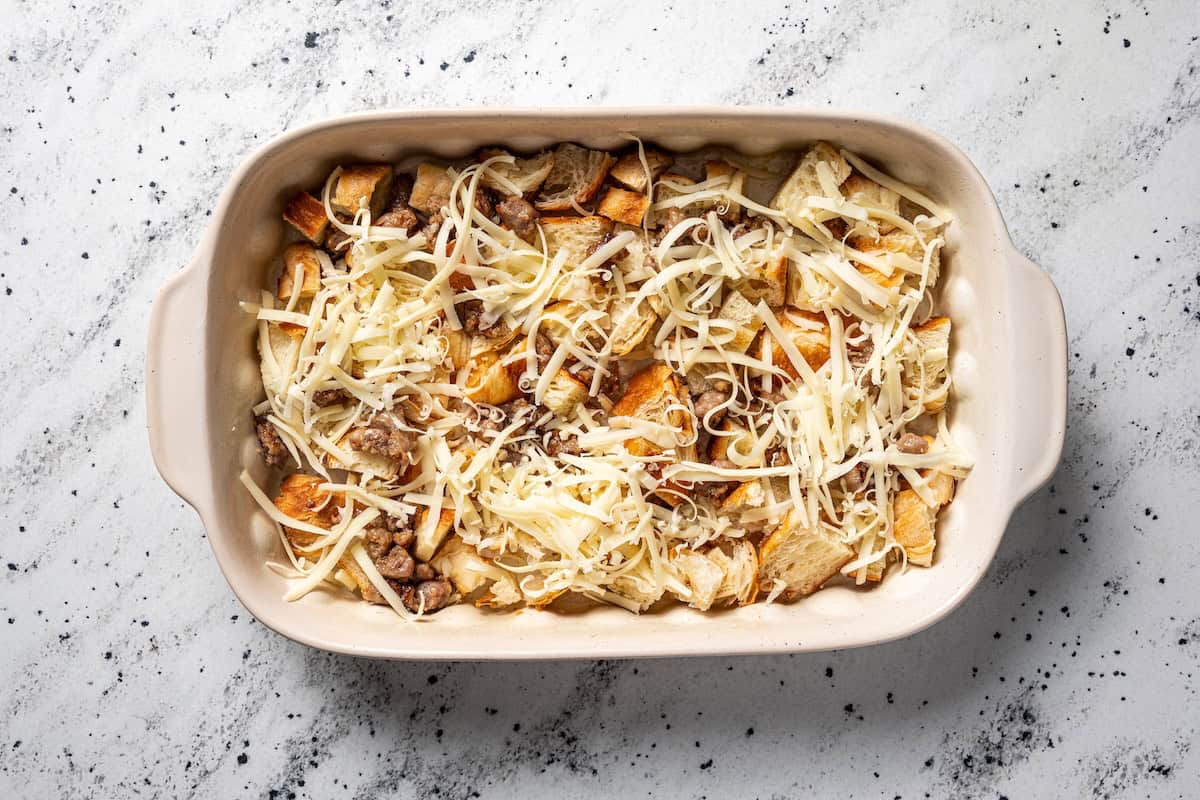
Lightly grease a 9×13-inch baking dish. Spread half of the croissant pieces (cut into 1-inch chunks) evenly over the bottom. Top with half of the cooked sausage, then half of the 2 cups shredded Gruyère cheese. Repeat the layers with the remaining croissants, sausage, and Gruyère, finishing with cheese on top.
4. Add the Egg Mixture:
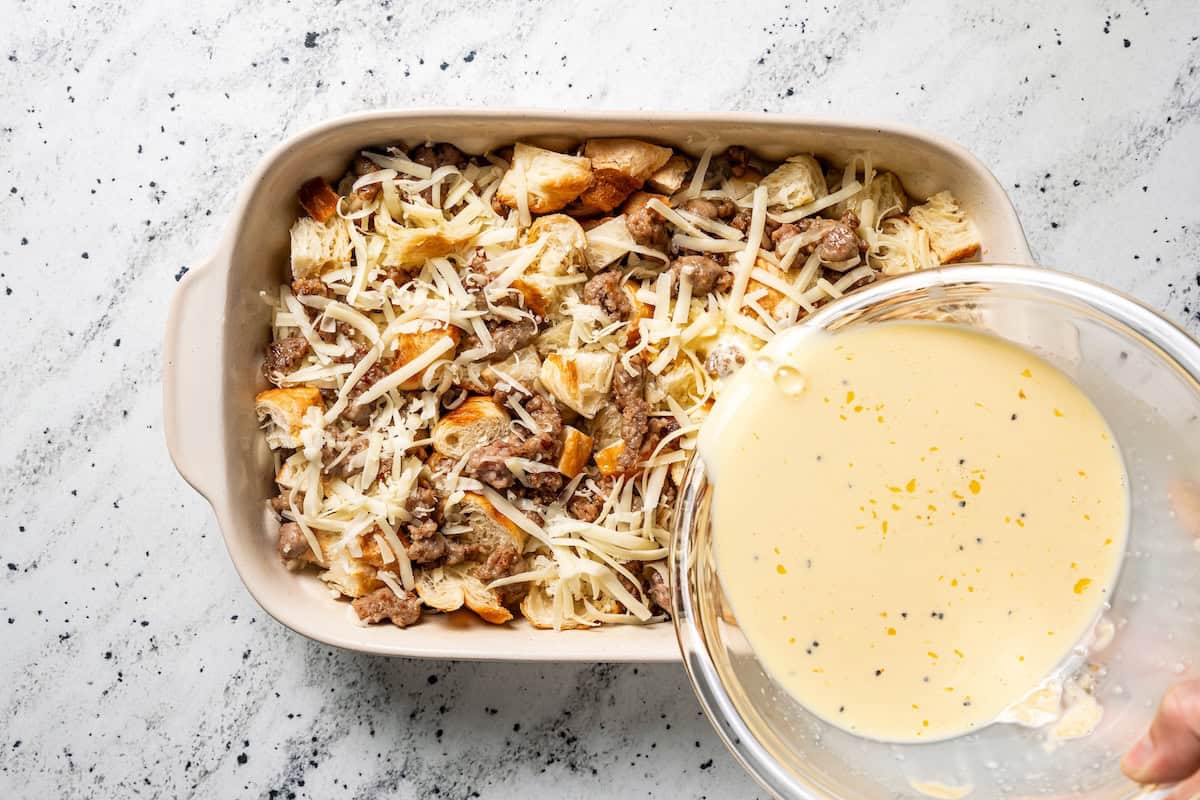
Slowly pour the custard evenly over the casserole, letting it settle between the layers. Use the back of a spoon to gently press the croissant pieces down so they’re submerged and can absorb the custard without compacting them into a dense mass.
5. Refrigerate Overnight:
Cover the baking dish tightly with plastic wrap or aluminum foil and refrigerate for at least 8 hours or overnight. This resting period allows the croissants to fully absorb the custard and the flavors to deepen.
6. Prepare for Baking:
Remove the casserole from the refrigerator and let it sit at room temperature for about 20 minutes while you preheat the oven to 350°F. This short rest helps the casserole bake more evenly.
7. Bake:
Remove the cover and bake uncovered for 30 minutes. Then loosely cover the top with aluminum foil and continue baking for 15–20 minutes, or until the center is set and the top is golden brown. The foil prevents over-browning while the interior finishes cooking.
8. Rest and Serve:
Let the casserole rest for 10 minutes before slicing. Garnish with 2 tablespoons fresh chopped parsley and serve warm.
Chef Pro Tips for Foolproof Results
Don’t rush the overnight chill. I cannot stress this enough: eight hours minimum is non-negotiable. The croissants need that full window to absorb the custard evenly. If you’re tempted to skip ahead, you’ll end up with dry patches and dense, unevenly soaked bread. Plan this dish for the night before you’re serving it—there’s no shortcut here.
Press gently but deliberately after pouring the custard. Use the back of a wooden spoon to press the croissant pieces down into the egg mixture right after you pour it in. This isn’t about crushing them; it’s about ensuring they make full contact with the custard so absorption happens uniformly. A light, deliberate touch does the job.
Let the casserole come to room temperature before baking. Those 20 minutes at room temperature before the oven even comes on aren’t wasted time—they ensure the strata bakes evenly from edge to center. Cold casseroles bake unevenly, with edges setting before the middle catches up.
Watch for the golden-brown signal, not just the timer. After you tent it loosely with foil at the 30-minute mark, keep an eye on the top. You’re looking for golden-brown edges peeking out from under the foil. When the center jiggles just slightly (not sloshy), you’re done.
Rest for the full 10 minutes. This lets the custard set completely, making slicing clean and neat. Skip this and you’ll have a casserole that falls apart on the plate.
Common Mistakes to Avoid
Skipping the overnight refrigeration. This is the most common mistake I see, and it’s the reason so many home cooks are disappointed by their strata. Rushing to bake after just a few hours leaves you with separated, watery egg and dry croissant pieces instead of a cohesive, custardy dish. The overnight rest is the entire foundation of this recipe’s success, so please don’t skip it.
Using stale croissants. Day-old croissants will turn to mush; fresh croissants hold their structure while absorbing custard. If your croissants are even slightly stale, the texture suffers dramatically, and you’ll end up with a soggy, collapsed casserole instead of a tender, creamy one.
Pouring the custard too quickly. A rushed pour leads to uneven distribution throughout the layers. Pour slowly and deliberately so the custard settles evenly around the sausage and cheese layers, ensuring every piece of croissant gets its fair share.
Forgetting to cover the dish tightly. An uncovered casserole dries out in the fridge, and the custard can develop a skin or separate. Always use a lid or tight plastic wrap to seal in moisture and protect your overnight soak.
Make-Ahead Timeline & Storage Guide
How Far Ahead Can You Prep This?
The beauty of this strata is that you can build the entire casserole up to 24 hours in advance. Layer your croissants, sausage, and Gruyère in the baking dish, pour over the custard, press gently, cover tightly, and refrigerate. This overnight (or even two-night) chill is what makes the magic happen—the croissant pieces drink up every drop of that egg mixture, creating that signature custardy interior.
If you want to get ahead even further, you can cook the sausage and prepare the egg custard separately up to 1 day before assembly. Store the cooled sausage in an airtight container and keep the whisked custard covered in the refrigerator. Just layer and pour the morning before you plan to bake.
Fridge Storage, Freezing & Reheating
After baking, store leftover strata covered in an airtight container in the refrigerator for up to 3 days. The custard-soaked croissants hold their texture beautifully during this window, staying tender and moist.
For freezing, wrap the fully baked and cooled strata tightly in plastic wrap, then aluminum foil, and freeze for up to 2 months. Thaw overnight in the refrigerator, then reheat gently in a 325°F oven for 10–15 minutes until warmed through. This gentle approach keeps the croissants tender and prevents the cheese from toughening. Individual portions reheat in about 8–10 minutes if your oven runs hot.
Serving Ideas & Holiday Pairings
I always serve this strata warm, right from the oven, with a simple green salad dressed in lemon vinaigrette on the side. The bright acidity cuts through the richness of the Gruyère and maple sausage beautifully, and fresh fruit—a handful of berries or sliced citrus—adds a refreshing contrast. This is brunch food at its most elegant, but it doesn’t need fussy plating. A generous wedge on each plate, a sprinkle of fresh parsley from the top, and you’re done.
For holiday gatherings, this strata is a gift. It feeds six generously, travels well to a potluck in its baking dish (just reheat at the host’s place), and impresses without requiring any last-minute attention. I’ve also boxed individual portions as thank-you gifts for neighbors during the holidays—just slice, wrap in parchment, and tuck into a small box with a reheating note.
Simple sides and drink pairings:
Fresh-squeezed orange juice or mimosas for a traditional brunch
Warm crusty bread for soaking up any custard from the plate
A light fruit compote or fresh berries on the side for brightness
Strong coffee or herbal tea to balance the savory-sweet flavors
Frequently Asked Questions
Can I double this recipe for a crowd?
Yes—simply double all ingredients and use two 9×13-inch baking dishes. The prep and refrigeration steps remain the same, though you may need to rotate the dishes halfway through baking if your oven has hot spots. Total baking time should stay around 45–50 minutes.
Can I make this ahead of time?
Absolutely. Refrigerate the assembled casserole covered for up to 24 hours before baking. The longer it sits, the better the croissants absorb the custard, so overnight is ideal.
How do I know when it’s fully baked?
The center should be set—no jiggle when gently shaken—and the top should be golden brown. If the top browns too quickly, tent loosely with foil partway through, as the recipe directs.
Can I reheat leftovers?
Yes. Store covered in the refrigerator for up to 3 days, then reheat individual portions in a 325°F oven for 10–15 minutes until warmed through. The custard will soften slightly as it warms, keeping everything tender.
What type of croissants work best?
Plain, butter croissants hold up best. Avoid chocolate-filled or almond-topped varieties, which can burn or compete with the savory flavors of the sausage and Gruyère.
Make-Ahead Croissant Breakfast Strata
Ingredients
Method
- Cook the sausage. Heat a large skillet over medium heat. Add the turkey sausage and cook for 6–8 minutes, breaking it up with a wooden spoon until browned and cooked through. Remove from the heat and let it cool slightly.
- Make the custard. In a large bowl, whisk together the eggs, half-and-half, Dijon mustard, garlic powder, salt, and black pepper until smooth and well combined.
- Layer the casserole. Lightly grease a 9×13-inch baking dish. Spread half of the croissant pieces evenly over the bottom. Top with half of the cooked sausage and half of the Gruyère. Repeat with the remaining croissants, sausage, and Gruyère.
- Add the egg mixture. Slowly pour the egg mixture evenly over the casserole. Gently press the croissant pieces down with the back of a spoon so they absorb the custard.
- Chill. Cover tightly and refrigerate for at least 8 hours or overnight.
- Prepare for baking. Remove the casserole from the refrigerator and let it sit at room temperature for about 20 minutes while the oven preheats to 350°F.
- Bake. Remove the cover and bake the breakfast casserole for 30 minutes. Loosely cover it with aluminum foil and continue baking for 15–20 minutes, or until the center is set and the top is golden brown.
- Rest and serve. Let the casserole rest for 10 minutes before slicing. Garnish with fresh parsley and serve warm.