
Key Ingredients & Why Each One Matters
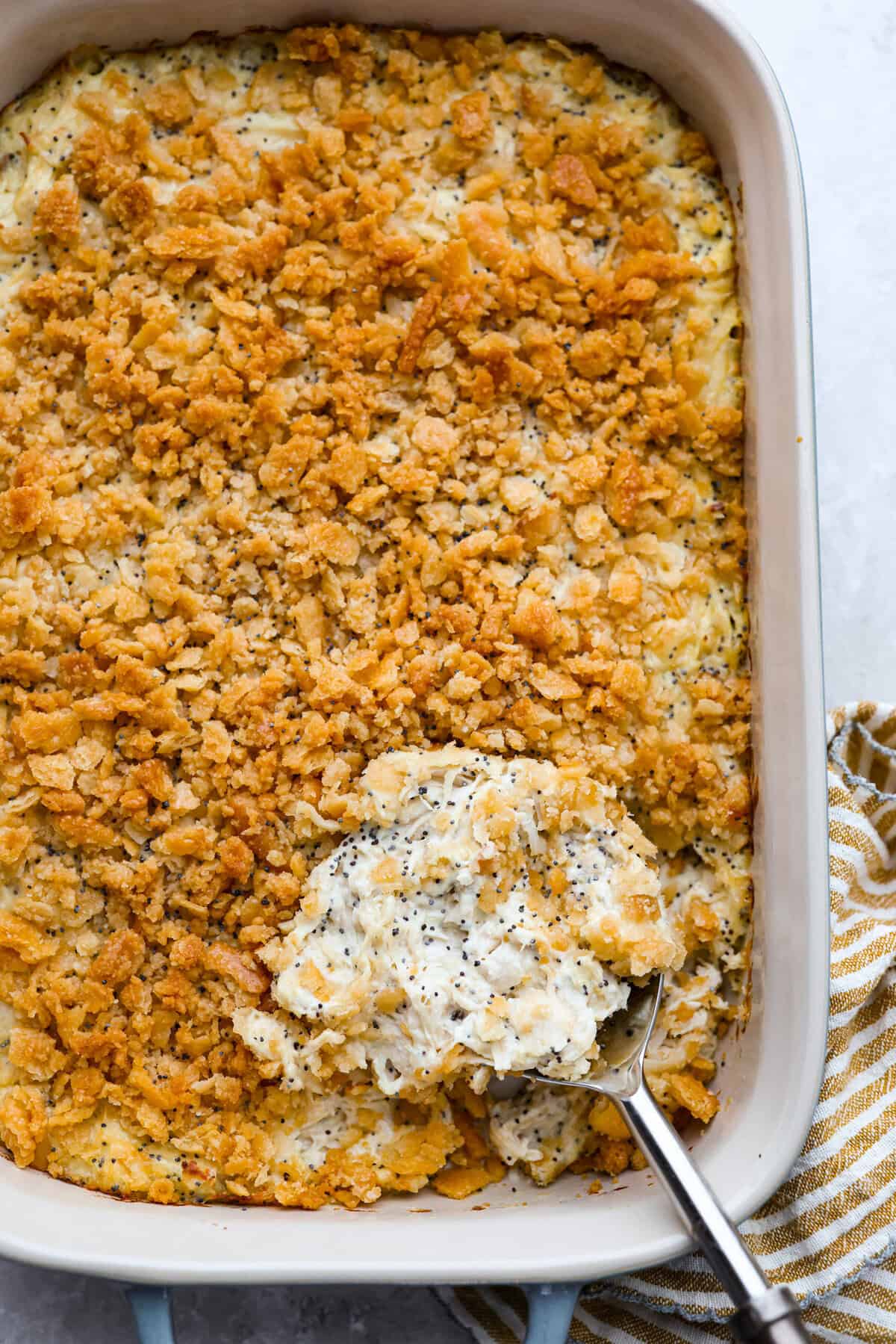
Cooked, Shredded Chicken: This is your protein foundation—use rotisserie chicken from the store or poach and shred chicken breasts at home, whatever fits your schedule. The shreds break apart easily in the creamy sauce, so you get tender, mouthful pieces in every bite rather than dense chunks.
Sour Cream: Cold sour cream adds tang and richness that keeps the casserole from tasting one-dimensional, while its fat content prevents the filling from drying out during baking. I always keep a container on hand because it’s the backbone of so many comfort dishes.
Condensed Cream of Chicken Soup: This pantry staple does the heavy lifting—it thickens the filling, adds savory umami depth, and bonds all the components together into a cohesive, clingy sauce. Don’t skip it thinking homemade sauce is “better”; the soup’s specific consistency is what makes this casserole work.
Shredded Parmesan Cheese: Parmesan melts into the creamy base and intensifies the savory character without overwhelming the dish, adding a subtle salty punch that makes you want another spoonful. Buy the wedge and shred it yourself if you can—pre-shredded versions sometimes contain anti-caking agents that affect melting.
Poppy Seeds: These tiny seeds are the secret that separates this casserole from generic chicken dishes—they contribute a delicate, nutty flavor that lingers on your palate and makes guests lean in and ask, “What’s in this?” Store them in a cool, dark cabinet so they don’t turn rancid.
Crushed Ritz Crackers: Ritz crackers have enough salt and buttery flavor baked in that they need no extra seasoning, and their delicate structure soaks up the melted butter to create that golden, crispy crown. Crush them by hand into uneven pieces—mixing fine crumbs with larger shards gives you better textural contrast.
Unsalted Butter: Melted butter acts as a moisture barrier around each cracker piece, promoting even browning through the Maillard reaction and keeping the topping crunchy rather than soggy throughout the bake.
Essential Kitchen Tools You Will Need
9 × 9 × 2-inch baking dish: This exact size ensures even heat distribution and proper bake time; a larger dish will cook faster, a smaller one slower.
Large mixing bowl: For combining the chicken filling ingredients thoroughly before transfer.
Medium mixing bowl: For tossing the crackers and melted butter together.
Nonstick cooking spray: Prevents sticking and makes cleanup effortless.
Step-by-Step Instructions
Before you start, position your oven rack in the center so the casserole bakes evenly, and have your 9 × 9 × 2-inch baking dish ready and sprayed with nonstick cooking spray.
1. Preheat the Oven:
Set your oven to 350°F and let it come to temperature while you prepare the filling. This ensures an even bake from the moment the casserole slides in.
2. Combine the Filling:
In a large bowl, add the 3 cups cooked shredded chicken, 1 cup sour cream, the 10.75-ounce can of condensed cream of chicken soup, ½ cup shredded parmesan cheese, and 2 teaspoons poppy seeds. Mix until all ingredients are evenly distributed and no streaks of sour cream remain—the mixture should look creamy and cohesive.
3. Spread into the Baking Dish:
Transfer the chicken mixture to your prepared pan and spread it into an even layer across the bottom. Press gently so it settles but don’t compress it too much; you want the filling to stay tender.
4. Prepare the Cracker Topping:
In a medium bowl, combine the 2 cups crushed Ritz crackers with the ½ cup melted unsalted butter and stir until the cracker crumbs are fully coated. The crackers should look moistened and clumped together slightly, not dry.
5. Top the Casserole:
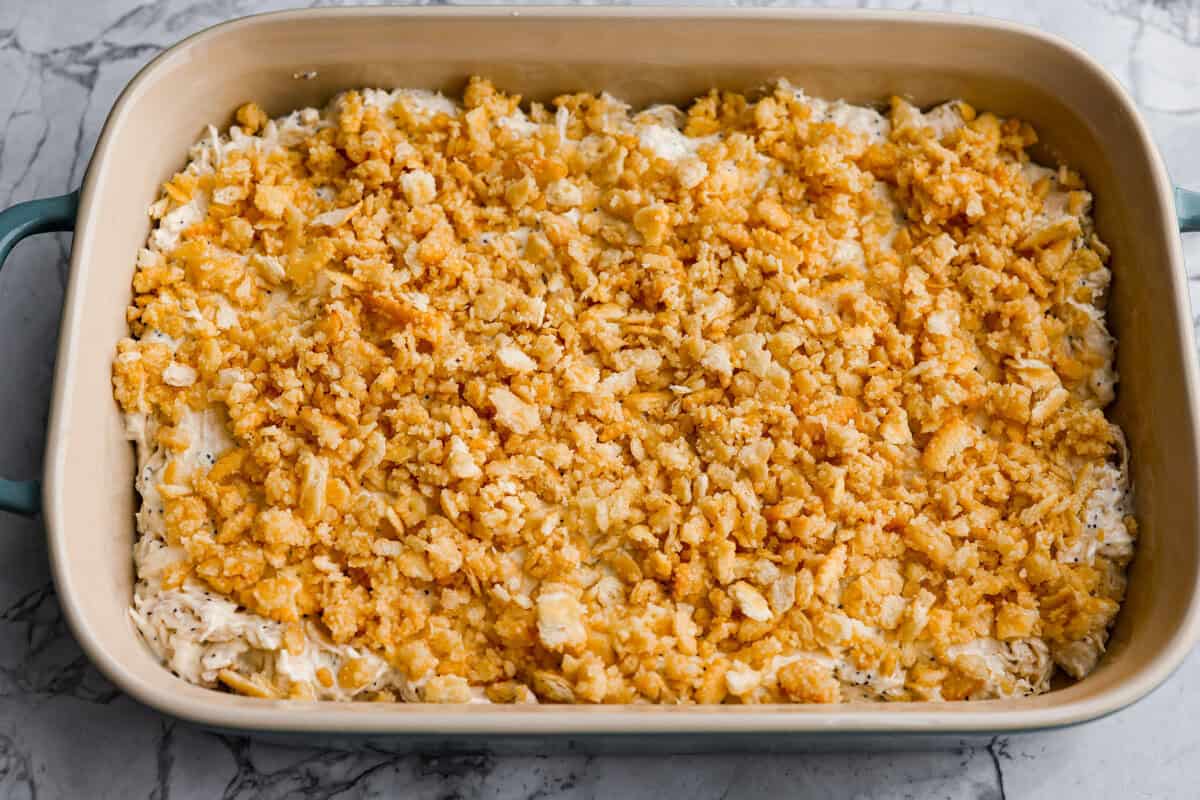
Sprinkle the buttered cracker mixture evenly over the chicken filling, covering the surface completely. Some crumbs will be finer, others larger—this variation creates a more interesting texture as they bake.
6. Bake Until Bubbly:
Place the casserole in the preheated oven and bake for 25–30 minutes. Watch for the edges to bubble up around the cracker topping and the crackers to turn golden brown. The filling should be hot throughout, and the topping should feel crispy when you give the dish a gentle shake—you’re aiming for a contrast between the creamy filling underneath and the crunchy layer on top.
7. Rest Briefly:
Let the casserole sit for 2–3 minutes after removing it from the oven before serving. This brief rest allows the filling to set slightly, making it easier to spoon onto plates without the topping sliding off.
Chef Pro Tips for Foolproof Results
Crush your crackers by hand, not in a food processor. I break mine into varied sizes—some fine crumbs, some pea-sized pieces—so they absorb the melted butter unevenly and create a multi-textured topping that stays crispy rather than turning into a compact, soggy layer. This textural contrast is what separates a good casserole from a memorable one.
Melt your butter and let it cool for 60 seconds before tossing with crackers. Butter that’s too hot will cook the crackers prematurely and unevenly; slightly cooler butter coats them evenly and allows them to toast properly during the oven bake. This temperature control is the difference between golden and browned.
Spread the chicken mixture in a single, even layer before topping. Use an offset spatula or the back of a spoon to press gently—no gaps. This ensures the heat penetrates uniformly and the filling bubbles at the edges around the same time the crackers brown on top.
Watch for edges to bubble, not the center. The filling will bubble around the perimeter first; that’s your signal the casserole is done and the residual heat will finish the center. If you wait for the entire dish to bubble, your cracker topping will burn.
Scale up easily for 8 servings. Simply double all ingredients and use a 9 × 13-inch baking dish. Add 5–10 minutes to baking time (30–40 minutes total), since the larger mass needs extra time to heat through and bubble evenly.
Common Mistakes to Avoid
Overmixing the chicken filling. Stir just until the sour cream, soup, parmesan, and poppy seeds are evenly distributed. Overmixing breaks down the shredded chicken into stringy bits and makes the filling dense and gluey rather than tender and cohesive.
Skipping the nonstick spray. The edges of this casserole brown deeply and can stick to an ungreased dish, making plating messy. A quick spray takes five seconds and saves frustration.
Topping the casserole immediately after assembling. If your chicken filling is still warm, the crackers will begin softening before the oven even heats up. Assemble 10–15 minutes ahead, or top just before sliding into the preheated oven.
Using crushed crackers straight from the bag. Pre-crushed crackers are often over-processed into fine powder that packs down and absorbs moisture too quickly, turning gummy. Hand-crush yours for better texture control.
Make-Ahead Timeline & Storage Guide
How Far Ahead Can You Prep This?
I love that this casserole rewards a little planning. You can assemble the entire dish up to 24 hours ahead: mix the chicken, sour cream, cream of chicken soup, parmesan, and poppy seeds in your baking dish, cover it tightly, and refrigerate. When you’re ready to bake, simply prepare the buttered Ritz cracker topping, sprinkle it over the cold filling, and bake as directed—you may need to add 5–10 extra minutes since you’re starting from a chilled state.
If you prefer even more flexibility, prep just the creamy chicken base and store it separately in an airtight container for up to 2 days. Keep the crushed Ritz crackers and melted butter in another container, then combine everything and bake when dinner time arrives. This two-container approach gives you maximum control over that crispy topping texture.
Fridge Storage, Freezing & Reheating
Leftovers keep well in an airtight container in the refrigerator for up to three days. The casserole reheats beautifully in a 325°F oven for 15–20 minutes, which gently warms the filling without drying it out and allows the Ritz topping to regain its crunch.
For freezing, I recommend storing the baked casserole in an airtight container for up to two months. Thaw it overnight in the refrigerator, then reheat using the same gentle oven method. This protects the creamy sauce from separation and keeps those buttered crackers as crispy as the day you baked it.
Serving Ideas & Holiday Pairings
This casserole shines brightest when you let it take center stage on a plate piled high enough to show off that buttery Ritz topping. I always spoon it straight from the baking dish into shallow bowls or onto dinner plates while it’s still warm and bubbling—that’s when the cracker layer is at its crispest and most golden. A generous helping serves as a complete meal on its own, though I’ve found that adding a bright counterpoint makes all the difference.
The creamy, rich filling practically demands something fresh and sharp alongside it. A crisp green salad dressed with a tangy vinaigrette cuts through the sour cream and butter beautifully, while steamed or roasted asparagus adds color and a subtle earthiness that complements the poppy seed notes. For a more casual presentation, pair it with a simple coleslaw or garlic bread to round out the dinner table.
Simple sides that work beautifully:
Crisp garden salad with lemon vinaigrette
Steamed or roasted asparagus with a squeeze of fresh lemon
Buttered egg noodles (if you want to extend servings for a crowd)
Steamed green beans with garlic
Frequently Asked Questions
Can I make this casserole ahead of time?
Yes—assemble it completely, cover tightly, and refrigerate for up to 24 hours. When ready to bake, add 5 minutes to the bake time since it’ll start cold. This makes it perfect for holiday planning.
Can I double this recipe for a crowd?
Absolutely. Double all ingredients and bake in two 9 × 9 × 2-inch baking dishes (or one 9 × 13-inch dish), adding 5–10 minutes to the total bake time since the larger volume takes longer to heat through.
How do I store leftovers?
Keep them in an airtight container in the refrigerator for up to three days. Reheat gently in a 325°F oven for 15–20 minutes to restore the cracker topping’s crispness without drying out the filling.
What if I don’t have Ritz crackers on hand?
The recipe is built around Ritz crackers specifically—their salty flavor and crispy texture are essential to the dish’s character. I’d recommend keeping a box in your pantry.
Can I use Greek yogurt instead of sour cream?
Yes, you can swap the 1 cup sour cream for Greek yogurt in equal measure. Greek yogurt will give you a slightly tangier filling with a touch less richness, but it works beautifully.
Ritz Cracker Poppy Seed Chicken Casserole
Ingredients
Method
- Preheat the oven to 350 degrees Fahrenheit. Spray a 2-quart or 9 X 9 X 2-inch baking dish with nonstick cooking spray.
- In a large bowl, add 3 cups cooked, shredded chicken, 1 cup sour cream, 1 (10.75- ounce) can condensed cream of chicken soup, ½ cup shredded parmesan cheese, and 2 teaspoons poppy seeds.
- Mix to combine well, and spread along the bottom of the prepared pan.
- In a medium bowl, add 2 cups crushed Ritz crackers and ½ cup melted unsalted butter. Stir to combine and sprinkle on top of the chicken mixture. Bake for 25-30 minutes or until bubbly.